Aetheria

August wears on and, when night falls, the heat doesn't fully fade. We often get into bed with an uncomfortable feeling: the skin is still holding the day's warmth, the shoulders and legs feel heavy, and the mind seems unable to switch off.
The body can't manage to relax because, physically, it hasn't found the drop in temperature it needs to fall asleep.
What really happens when the skin holds on to heat
For the body to drift into sleep naturally, the core body temperature needs to fall slightly. However, after hours in the sun, in the hot air outdoors or in the dry contrast of air conditioning, the skin acts like a radiator that keeps heat at the surface.
On top of this comes the build-up of sweat, sunscreen and the quiet dehydration of summer. When the pores and the skin's outer layer are saturated, the feeling of heaviness grows. The body feels overheated and the skin barrier loses its basic moisture balance.
Signs that your skin needs to cool down before sleep:
• A burning sensation or a lingering flush on areas such as the décolletage, shoulders or limbs.
• Not being able to feel the sheet stay cool for more than a few seconds.
• Skin that feels rough to the touch, or tight, even though you have sweated through the day.
• Heavy legs and a general bodily tiredness when you lie down.
Practical solutions: the night-time cooling protocol
It's not about adding complicated steps to your routine when all you want is to rest, but about applying gestures of basic physics and botany that bring calm back to the body within minutes.
1. Gentle, temperature-regulating cleansing
A summer night shower shouldn't be a quick formality, nor a blast of ice-cold water (which triggers an immediate heat rebound). Use lukewarm water, leaning towards cool. To lift away the build-up of sweat and sunscreen without stressing the skin, reach for solid cleansers with kindred ingredients such as pink clay and jojoba oil. The clay helps to cleanse the pore deeply and decongest the surface without stripping the skin of its essential oils, while the jojoba rebalances hydration instantly.
2. Let heat evaporate from key areas
After showering, leave your limbs slightly damp for a few seconds before drying off completely. Water evaporating from the skin helps to dissipate the heat that gathers in the large blood vessels (wrists, ankles and the area behind the knees).
3. Melting nourishment with no heaviness
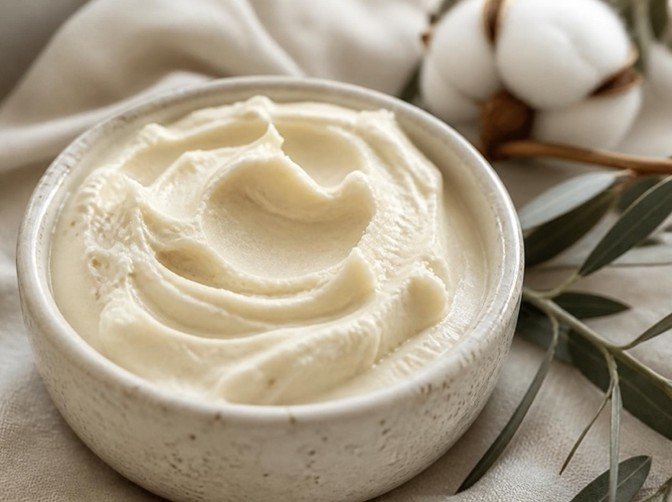
Leaving the skin dehydrated after sun exposure speeds up premature ageing and dryness. The key is to use a body butter formulated to melt on contact with the skin. Apply a tiny amount with slow, upward strokes from the ankles up. This gentle massage helps to reactivate surface circulation and eases the heaviness in the legs, without leaving a greasy layer to bother you as you settle in for the night.
Summer self-care isn't about collecting products, but about listening to what the body asks for as the light goes down. Bringing down the skin's temperature and giving it a moment of nourishment before sleep, to tell the body that the day is over.
Caring for yourself in August is as simple as giving the body back the freshness, the air and the calm that the day has slowly taken away.